How Invisalign Calabasas CA Aligners Are Custom Made
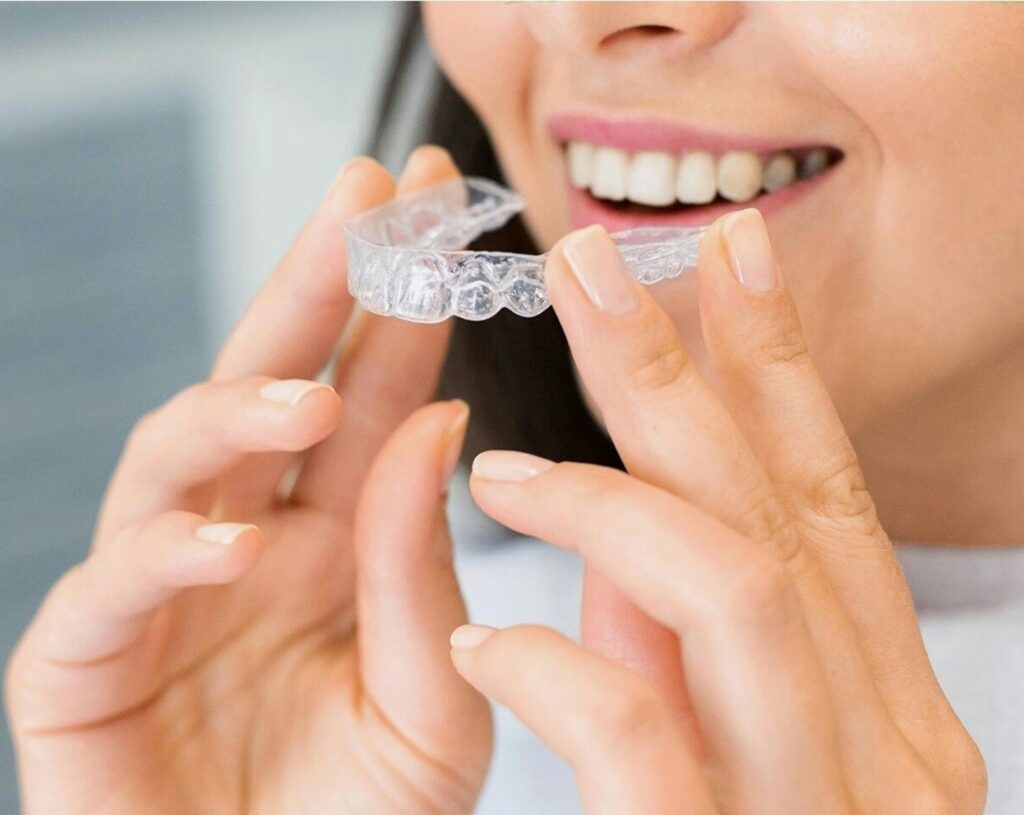
When patients first pick up a set of clear aligners, the trays look simple enough. Thin, transparent plastic. Smooth edges. A shape that snaps over the teeth with a quiet click. What most people do not see is how much planning, measurement, and careful adjustment sits behind that apparent simplicity.
Custom aligners are not generic mouthguards and they are not made from a rough impression alone. A well-made Invisalign case depends on diagnosis, digital modeling, biomechanics, manufacturing precision, and ongoing clinical judgment. That matters because two smiles can look similar at a glance and still require very different tooth movements. One patient may need to rotate a canine that has been tucked inward for years. Another may need root control, bite correction, or space management after crowding. The trays may look alike in the hand, but the engineering behind them is case-specific.
For people researching Invisalign Calabasas CA treatment, it helps to understand where the aligners actually come from and how they are personalized. The better you understand the process, the easier it is to ask smart questions during your consultation and to spot the difference between a rushed case and a carefully managed one.
It starts with diagnosis, not plastic
The first custom step is not manufacturing. It is diagnosis.
A dentist or orthodontic provider begins by examining the teeth, gums, bite, jaw relationships, and overall oral health. If a patient has untreated decay, active gum disease, or significant bone loss, aligners may need to wait. Moving teeth in an unhealthy mouth is a recipe for problems. In practice, experienced clinicians often spend more time talking about what must happen before aligners than patients expect. That is a good sign, not a delay tactic.
At this stage, records are collected. These typically include digital scans of the teeth, photos from multiple angles, and often X-rays. The scans capture the visible shape of the teeth and bite. The photos help with smile design and tracking. The X-rays reveal what scans cannot show, including root length, bone support, impacted teeth, previous dental work below the gumline, and the relationship of the roots to surrounding structures.
This is where the phrase “custom made” starts to become real. A tray is only as accurate as the records used to design it. If the bite registration is off by even a small amount, or if the scan misses a distorted tooth edge, that error can carry forward into treatment planning.
Digital scans replace the old messy impression for most cases
Most modern Invisalign cases begin with an intraoral scanner. Instead of filling a tray with impression material and asking a patient to bite down while it sets, the provider uses a handheld wand to capture thousands of images per second. Software stitches those images into a three-dimensional model of the teeth and gums.
Patients are usually surprised by how detailed these scans are. Tiny chips, worn edges, rotations, crowding patterns, and old restorations all show up clearly. If there is a crown or a bonded filling, the provider can see how that tooth differs from natural enamel. That matters because attachments bond differently to porcelain than to enamel, and tray retention can vary around restored teeth.
A good scan takes patience. Saliva has to be controlled. The tongue and cheeks need to stay out of the field. The provider must capture the biting surfaces, the front and back of each tooth, and the gumline contours. If a scan is rushed, the software may fill in missing areas with approximations. That is useful for creating a visual model, but less useful for tooth movement that needs to fit with tight precision.
In clinical settings, rescanning one or two areas is common. It is not a sign that anything has gone wrong. It usually means the provider wants a sharper dataset before submitting the case.
The bite is as important as the alignment
Patients often focus on straight front teeth because that is what they see in the mirror. Providers look at how the teeth meet. Bite relationships determine whether aligners will simply line up the visible teeth or create a stable result.
A person with deep overbite may need intrusion of front teeth or extrusion of posterior teeth. A patient with crossbite may need expansion and careful sequencing so the upper and lower teeth can move without colliding. In some cases, crowding can be relieved by expansion or interproximal reduction, which is the controlled polishing of tiny amounts of enamel between selected teeth. In others, that approach would be unstable or insufficient.
This is one reason custom aligners are not made by putting your teeth into a scanner and pressing print. The digital model has to be interpreted by someone who understands force systems and tissue response. Teeth do not move like pieces on a board. Roots travel through bone. Ligaments remodel. Certain movements, like tipping, occur more easily than bodily translation or large rotations. The treatment plan must respect those realities.
The virtual treatment plan is where the case takes shape
Once the scans and records are collected, a digital treatment plan is created. Invisalign uses software to map out a staged sequence of movements. Think of it as a series of tiny steps rather than one dramatic shift. Each aligner is designed to move selected teeth a fraction of a millimeter or a few degrees at a time.
This stage often includes collaboration between the provider and the laboratory planning team. The software can generate a proposed setup, but the treating doctor reviews and modifies it. That review is not a formality. It is where experience matters.
A clinician may decide that a lateral incisor should not be rotated until more space has been created. Another may choose to overcorrect a stubborn canine because, in real mouths, certain teeth have a habit of rebounding or lagging behind the digital plan. A small posterior open bite may be acceptable during treatment if it is likely to settle later. On the other hand, a setup that looks pretty on screen may be biologically unrealistic if the roots would need to move farther or faster than the bone can support.
Patients sometimes see the smile simulation and assume it is a guaranteed preview. It is better understood as a treatment map. It is useful, often impressively accurate, but it is still a projection. The mouth is not software. Compliance, attachment retention, tissue health, and tooth response all affect the outcome.
Attachments are one of the reasons aligners can do more than people expect
Many custom Invisalign cases include small tooth-colored shapes bonded to certain teeth. These are called attachments. They are not decorative. They act like handles that help the tray grip a tooth and deliver force in a specific direction.
Without attachments, some movements would be far less predictable. Rotating round teeth like canines and premolars is harder because the aligner has less to grab. Extruding a tooth, controlling root position, or creating torque often requires well-placed attachments and a tray engineered around them.
The design of each attachment is case-specific. Its shape, size, and position depend on the movement planned. That is part of how the aligners are custom made. The tray is not merely molded to the current teeth. It is designed to interact with future attachments and to push or pull in a controlled sequence over time.
Patients usually stop noticing attachments after the first week or two. They feel a bit bulky at first, especially when removing the trays, but they are central to making many Invisalign cases work well.
Manufacturing happens in a series, not one tray at a time
Once the digital plan is approved, the aligners are manufactured as a complete series. Each tray represents one stage in the sequence. The patient may receive a portion of the series at first, or several boxes at a time, depending on the provider’s protocol and the complexity of the case.
While manufacturing methods are proprietary and evolve over time, the broad process follows a clear logic. A physical model or equivalent production form is generated for each stage, and transparent thermoplastic material is formed to match that stage. The edges are trimmed and refined so the tray seats accurately and feels smooth enough for daily wear.
Precision matters here more than most people realize. If the trim is rough, the tray can irritate the gums. If the fit is slightly distorted, the aligner may not fully seat, which reduces force delivery and tracking. If the material thickness varies too much, force levels can become inconsistent. That is why mass-produced, one-size-fits-most clear trays cannot replicate what a true aligner system does.
A patient usually wears each set for about one to two weeks, though protocols vary. The timing depends on the treatment plan, the provider’s judgment, and how well the teeth are tracking. Some clinicians are comfortable with faster changes in straightforward cases. Others deliberately hold trays longer when movement is dense, attachments are numerous, or compliance has been uneven.
The trays are custom, but the success is only partly made in the lab
A common misunderstanding is that once the aligners are manufactured, the hard part is over. In reality, treatment continues to be custom throughout the process.
Teeth do not always track exactly as predicted. A tray may fit beautifully everywhere except one incisor that starts lagging behind. An attachment can pop off. A patient may wear trays 14 hours a day instead of the recommended 20 to 22, then wonder why the next aligner feels impossible to seat. These are not unusual events. They are part of real-world care.
This is where monitoring matters. At follow-up visits, the provider checks how the trays fit, whether attachments are still in place, how the bite is changing, and whether refinements are likely. Refinements are additional aligners ordered after reassessment to improve details that the original series did not fully achieve. They are common, even in well-run cases. A refinement is not automatically a sign of failure. Often it reflects the fact that biological systems are not perfectly obedient.
For patients exploring Invisalign Calabasas CA options, this is one of the most important distinctions to understand. You are not simply buying a box of trays. You are entering a guided treatment process in which the trays are one component.
A few practical steps happen in the office before full wear begins
The delivery appointment is more technical than it looks. The trays may be ready, but they are not just handed over like a retainer. The provider often places attachments using a template tray, checks the seating of the first aligners, and reviews wear instructions in detail.
The typical first-day sequence includes:
- Trying in the initial aligners to verify fit.
- Bonding any planned attachments to the teeth.
- Checking for pressure areas or rough edges.
- Confirming the patient can insert and remove the trays properly.
- Reviewing wear time, cleaning, and what to do if a tray cracks or feels off.
The insertion and removal piece matters more than people expect. Some patients pinch from the front and distort the tray. Others pull from one side only and place excessive force on attachments. A two-minute correction in technique can prevent weeks of frustration.
Why some cases need extra customization
Not every Invisalign case is a simple crowding fix. Several factors can make the manufacturing and planning process more complex.
Teeth with large fillings or crowns may need modified attachment strategies. Short clinical crowns can reduce aligner grip. Narrow arches may require expansion that is staged cautiously to protect periodontal health. Adults with previous orthodontic relapse often present with old bonded retainers, triangular spaces near the gums, or bite discrepancies that need more than cosmetic straightening.
Then there are mixed-restoration mouths, which are common in adults. A patient may have natural enamel on most teeth, two veneers, one implant crown, and a molar with a large composite filling. Each of those surfaces responds differently. Natural teeth move. Implants do not. Veneers need careful handling during attachment placement and removal. The treatment plan has to work around those realities.
That is why the phrase “custom made” should not be Invisalign Calabasas CA reduced to tray shape alone. True customization includes movement sequencing, material fit, attachment design, and adaptation to the condition of the actual mouth.
What patients can do to help the custom fit work as intended
The best-made aligner still depends on daily habits. Clear trays can only deliver the planned forces when they are seated fully and worn enough hours each day.
A few habits make an outsized difference:
- Wear the trays for the prescribed time, usually close to full-time except for eating and drinking anything but water.
- Seat the aligners fully after putting them in, especially during the first few days of a new tray.
- Keep attachments intact and report one that breaks off rather than waiting until the next visit.
- Store trays properly so they do not warp in a hot car or disappear in a napkin at lunch.
- Bring previous and current trays to appointments if tracking becomes questionable.
That last point is more useful than it sounds. If a tray is not fitting well, the previous one can sometimes help the provider judge whether the issue is incomplete movement, poor wear, or tray damage.
Refinements are part of craftsmanship, not a flaw in the concept
Patients sometimes feel discouraged if they hear the word refinement near the end of treatment. They picture a detour. A better way to view it is fine-tuning.
In traditional braces, finishing bends and bracket repositioning are normal parts of detail work. Clear aligner refinements serve a similar purpose. Maybe one rotated lower incisor is 80 percent corrected but not perfect. Maybe the bite has improved significantly, yet one side needs a bit more settling. Maybe the front teeth look straight, but the provider wants tighter contact points or better root positioning before moving to retention.
Good clinicians do not ignore those details just because the smile already looks better. They order additional scans, update the digital setup, and manufacture another small series of custom trays. That is treatment responding to reality, not blindly following the original plan.
How retention fits into the custom process
The final stage of aligner treatment is retention. Once the teeth reach the desired position, the bone and soft tissues still need time to stabilize around them. Teeth have memory. Without retention, many drift.
Retainers are also custom made from new records or final aligner positions. In some cases, removable retainers are enough. In others, a fixed bonded retainer behind the front teeth is added for extra insurance, especially when lower incisor crowding was severe before treatment. The choice depends on the case and on the patient’s history. Someone who had orthodontics as a teenager and relapsed over ten years usually needs a retention plan taken very seriously.
This part deserves more emphasis than it gets. Patients often focus on getting through the last active Invisalign Calabasas CA tray, then treat retainers as optional. From a professional standpoint, retention is not an accessory. It is the final phase of treatment.
Choosing a provider matters as much as choosing the brand
The aligners are manufactured with sophisticated consistency, but the result still depends heavily on the person designing and managing the case. Two providers can start with the same patient records and make very different planning decisions. One might stage the case conservatively and protect the bite. Another might chase speed and end up needing more mid-course correction.
When people search for Invisalign Calabasas CA, they are often comparing price, convenience, and office aesthetics. Those things have their place, but they should not overshadow the fundamentals. Ask who reviews the digital setup. Ask how often progress is checked. Ask what happens if attachments come off or if tracking stalls. Ask whether refinements are common in that office and how retention is handled. Those answers reveal more about quality than a polished social media feed ever will.
Custom aligners are impressive because they combine digital precision with biological treatment. The trays themselves are carefully made, but the real customization comes from the whole chain of decisions, from diagnosis to scanning to virtual planning to chairside adjustments and retention. That is why the best cases feel smooth to the patient. A lot of unseen work has already been done to make the process look easy.
Oaks Dental
5000 Parkway Calabasas, Suite 308
Calabasas, CA 91302
(818) 643-6521
FAQ About Invisalign Calabasas CA
How many hours a day should I wear Invisalign?
Clear aligners are typically worn for 20 to 22 hours a day. Follow your dentist’s instructions for your specific treatment plan.
What age is best for Invisalign?
Many teens and adults can use clear aligners. A dentist can assess dental development, oral health, and the type of tooth movement needed.
What affects the cost of Invisalign in California?
Cost depends on the complexity and length of treatment and what the quoted plan includes. Ask for an itemized estimate and check any orthodontic coverage with your insurer.