How Gum Health Impacts Dental Implants in Calabasas CA
Dental implants have an excellent reputation for strength, longevity, and natural function, but that reputation depends on something many patients underestimate: healthy gums. People often focus on the implant itself, the crown that will show when they smile, or the timeline for healing. The gum tissue around the implant gets less attention, even though it plays a central role in whether the final result stays comfortable and stable for years.
In practice, gum health is one of the clearest predictors of how smoothly implant treatment goes. I have seen two patients receive nearly identical implants from a technical standpoint, yet their outcomes looked very different six months later because their gum condition at the start was not the same. One healed with tight, pink tissue and no tenderness. The other struggled with inflammation, plaque retention, and repeated maintenance visits. The implant did not fail, but the path was harder, more expensive, and more stressful than it needed to be.
For patients considering Dental Implants Calabasas CA, understanding the connection between gums and implants is not just helpful, it is essential. Gum tissue is not decorative. It is part of the support system.
The role gums play around an implant
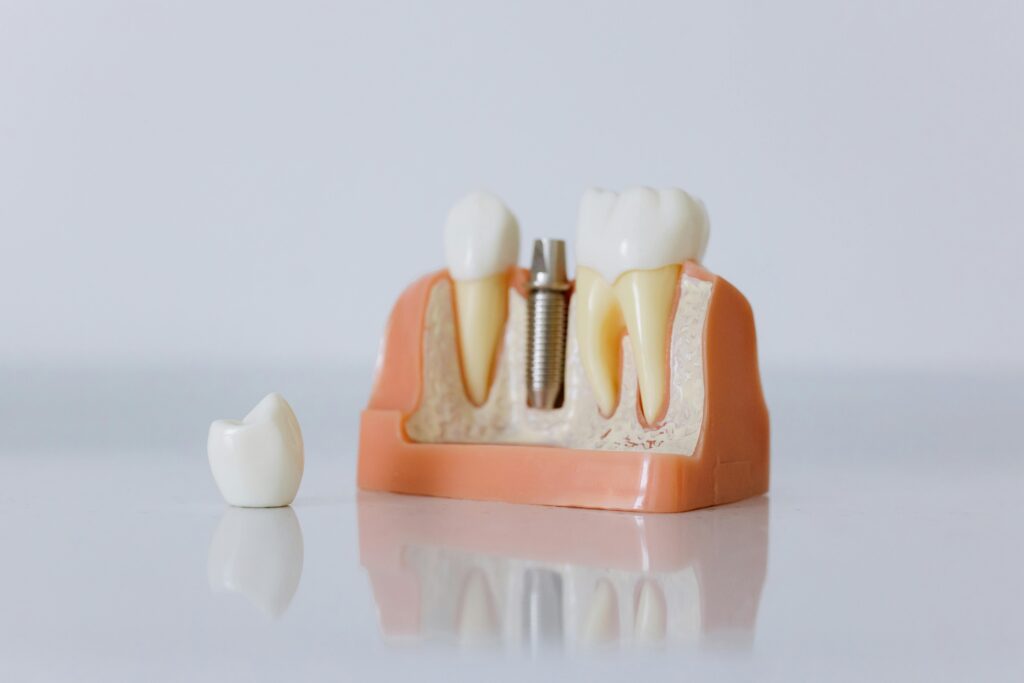
An implant is placed into the jawbone, so it is easy to assume bone is the whole story. Bone matters enormously, but the gums create the seal around the implant and protect the underlying structures from bacteria and chronic irritation. Healthy gum tissue acts like a collar around the implant. It helps reduce food trapping, limits microbial penetration, and supports easier cleaning at home.
Natural teeth have a periodontal ligament, which gives them a different biological attachment than implants. Implants do not have that same cushioning or defensive architecture. That means the surrounding soft tissue has to do a great deal of work. When the gums are thick, healthy, and well adapted, the implant area tends to be easier to maintain. When the tissue is thin, inflamed, or receding, problems can develop more quickly than patients expect.
This difference matters because inflammation around a natural tooth and inflammation around an implant are not identical situations. An implant cannot get a cavity, but it can develop peri-implant mucositis or peri-implantitis. Those conditions start in the soft tissue and can progress to bone loss if ignored. In other words, the gums are often where trouble begins.
Why gum disease changes the risk picture
If a patient has active gingivitis or periodontitis, implant planning should slow down. Not stop forever, necessarily, but slow down enough to stabilize the tissues first. Gum disease signals that bacteria and inflammation are already overwhelming the mouth’s defenses. Placing an implant into that environment increases the chance of complications during healing and maintenance.
Periodontitis is especially important because it reflects a history of attachment loss, bone loss, and bacterial imbalance. Patients who have lost teeth because of gum disease are not automatically poor implant candidates, but they do carry higher risk if the original disease process is still active or poorly controlled. This is one of the most common misunderstandings I hear in consultation rooms. Some people assume that once the failing tooth is removed, the gum problem disappears with it. It does not. The bacterial patterns and home care challenges that led to disease can remain.
Clinically, this risk shows up in predictable ways. Inflamed gums bleed more easily, making it harder to assess tissue quality during treatment. Swollen tissue can mask underlying defects. Patients with ongoing periodontal issues may also have deeper pockets in adjacent teeth, unstable hygiene routines, or habits such as smoking and nighttime clenching that complicate healing.
A patient from the Calabasas area once described her mouth as feeling "mostly fine" because nothing hurt. On exam, her gums told a different story. Several areas bled on probing, and there was moderate bone loss around neighboring teeth. She wanted a fast implant replacement for a molar. The right approach was not speed. We first addressed periodontal therapy, improved her cleaning technique, and reassessed tissue stability. Her implant treatment happened later than she hoped, but under much better conditions.
Healthy gums before surgery often make the difference after surgery
The most successful implant cases usually begin before surgery, with thorough evaluation and preparation. Gum health affects nearly every stage:
- the accuracy of treatment planning
- the quality of the surgical field
- the predictability of soft tissue healing
- the long-term seal around the implant
- the patient’s ability to keep the area clean
This is why a careful implant evaluation includes more than imaging and bone measurements. The color, thickness, contour, and resilience of the gum tissue matter. So does the health of nearby teeth. If the neighboring gums are chronically inflamed, the implant site is entering a compromised neighborhood.
Good preparation sometimes means a deep cleaning, periodontal maintenance, home care coaching, or waiting several weeks to confirm that bleeding and inflammation have improved. Some patients need grafting to build up soft tissue volume, especially in visible areas where aesthetics matter. Others need extraction sites to heal in a staged way rather than rushing directly into implant placement.
That delay can feel frustrating. It is still better than trying to rescue a struggling implant later.
What happens when gum health is poor
When gums are unhealthy, implant problems do not always appear dramatically at first. More often, they begin with small signs that are easy to dismiss. Mild bleeding while brushing. A persistent bad taste near the implant. Tenderness when flossing. A feeling that food gets stuck more often than it should. These are not cosmetic nuisances. They can be early warnings.
Peri-implant mucositis is inflammation confined to the soft tissue around the implant. At this stage, the problem is still reversible if it is caught and treated promptly. Patients may notice redness, puffiness, or bleeding. Sometimes there is no pain, which is exactly why it gets overlooked. Left untreated, mucositis can progress to peri-implantitis, where inflammation is accompanied by bone loss. Once bone is lost around an implant, treatment becomes more involved and the prognosis becomes more guarded.
The frustrating part is that patients often assume implants are maintenance free because they are artificial. That belief causes real damage. Implants need attentive care, and unhealthy gums raise the cost of neglect. A crown on an implant can look perfect from the front while disease quietly develops underneath the gumline.
Gum thickness, recession, and the look of the final result
Gum health is not only about disease prevention. It also affects how natural the implant looks, especially in the front of the mouth. Thick, stable tissue tends to mask the edges of restorative materials better and resists recession more predictably. Thin tissue is more delicate. It can recede more easily, show metal or shadowing underneath, and create asymmetry next to natural teeth.
This becomes especially relevant in image-conscious communities where patients care deeply about subtle cosmetic details. In Calabasas, many implant patients are not just asking whether the implant will function. They want to know whether it will blend seamlessly when Dental Implants Calabasas CA they speak, laugh, and smile in natural light. Gum tissue determines a surprising amount of that answer.
A technically integrated implant can still be an aesthetic disappointment if the gum line pulls back or looks uneven. That is why skilled implant planning includes soft tissue management, not only fixture placement. Sometimes the best decision is to augment the tissue before or during implant treatment. That choice can improve both health and appearance.
Bone and gums work together, not separately
Bone often gets top billing in implant discussions because osseointegration is the anchor of the whole restoration. But bone and gum health are linked. Inflamed soft tissue increases the risk that bone support will eventually be affected. Likewise, bone loss can alter gum contour and make cleaning more difficult.
After a tooth is lost, both the ridge and the soft tissue begin to change. The longer a site sits untreated, the more remodeling can occur. In some cases, the bone narrows and the gum architecture flattens. That may not rule out an implant, but it can change what is required to place it well. A patient who starts with pristine gum health may still need grafting because the site has collapsed over time. Another patient may have enough bone on a scan but poor soft tissue quality that threatens maintenance.
These are judgment calls, not one-size-fits-all formulas. Good implant dentistry lives in those details.
Daily habits that protect implants and gums
Most implant complications are not caused by one catastrophic event. They are built slowly through inconsistent hygiene, missed maintenance visits, smoking, uncontrolled diabetes, dry mouth, or poorly fitting restorations that trap plaque. The daily routine matters more than many patients realize.
For most people, protecting the gums around an implant means keeping plaque disruption simple and consistent. Gentle brushing at the gumline, cleaning between teeth and implants with tools that actually fit the space, and returning for maintenance before tartar hardens into something the patient cannot remove at home. Overbrushing can also be a problem. I have seen well intentioned patients scrub the area aggressively because they fear infection, only to irritate the tissue and cause soreness that discourages cleaning.
The best home care is not the most elaborate. It is the one the patient can repeat every day without causing trauma.
Smoking, stress, and other overlooked factors
Certain risk factors deserve more attention because they affect gum health and implant performance at the same time. Smoking is one of the clearest examples. It impairs blood flow, slows healing, and increases the risk of infection and implant complications. Some smokers heal acceptably in the short term, which can create false confidence, but their tissues often show more inflammation and less resilience over time.
Diabetes matters too, especially if blood sugar control is poor. Elevated glucose levels can worsen inflammation and slow tissue repair. That does not mean diabetic patients cannot do well with implants. Many do very well. It means the condition should be controlled and openly discussed.
Stress and clenching deserve mention as well. They do not cause gum disease by themselves, but they can complicate inflammation, healing, and restorative wear. A patient who clenches heavily may need a night guard to protect the implant crown and surrounding structures. Dry mouth, often related to medications, can also increase plaque accumulation and tissue irritation.
These are the kinds of details that separate a straightforward implant case from one that needs extra supervision.
What a strong pre-implant gum assessment should include
A meaningful implant consultation should go beyond "Do you have enough bone?" It should assess the soft tissue thoroughly and connect those findings to the treatment plan. In most cases, the clinician should evaluate:
- bleeding, plaque levels, and signs of active gum inflammation
- pocketing and bone support around neighboring teeth
- gum thickness and the amount of keratinized tissue at the site
- recession risk, smile line, and cosmetic expectations
- medical and lifestyle factors that affect healing
This is also the stage where patient honesty matters. If brushing causes bleeding, say so. If regular cleanings have been delayed for two years, mention it. If you smoke socially on weekends, include that too. Implant care works best when risk is named early instead of discovered later.
Why maintenance matters after placement
Once the implant is integrated and restored, many patients mentally move on. That is understandable. The hard part feels finished. Yet maintenance begins here in a serious way. Implant restorations should be checked regularly for plaque accumulation, tissue changes, bite stress, and the condition of adjacent teeth. Many implant issues are manageable when found early and much harder to control when allowed to smolder.
Professional maintenance intervals vary. Some patients do well with standard hygiene recalls, while others with a history of gum disease need closer periodontal maintenance. The interval is not a moral judgment. It is a reflection of risk. A patient with previous periodontitis, reduced dexterity, and several implants may need more frequent monitoring than a younger patient with excellent tissue health and meticulous home care.
One of the most practical pieces of advice I give is this: if the gum around an implant bleeds repeatedly, do not assume it is normal just because the implant feels solid. Bleeding is information. Get it evaluated.
The Calabasas factor: aesthetics, expectations, and long-term planning
Patients exploring Dental Implants Calabasas CA often bring high expectations for appearance, convenience, and durability. That is not a bad thing. It simply means treatment should be planned with equal attention to biology and aesthetics. In a visible smile zone, stable gums are what allow the restoration to disappear into the natural dentition. In the back of the mouth, healthy gums help preserve comfort and chewing function without chronic irritation.
Calabasas patients also tend to ask smart, practical questions about recovery time, social downtime, and how soon they can return to normal routines. Those are reasonable concerns, but the best long-term result sometimes comes from choosing the slower path. If the gums need therapy first, that is not a detour. It is part of the implant procedure, even if it happens before the implant is placed.
There is also a local reality worth acknowledging: many adults seeking implants have years of prior dental work, cosmetic treatment, or periodontal history behind them. They are not starting from a blank slate. That history influences the gums, the bite, and the maintenance needs of the final implant.
When gum treatment should come before implant treatment
Some patients worry that being told to treat their gums first means they are being "put off." Usually, the opposite is true. It means the clinician is thinking beyond the surgical appointment. Treating inflammation first can improve comfort, make tissue behavior more predictable, and reduce the chances of preventable complications.
That preparation may involve periodontal scaling, bacterial control, replacing a poorly fitting temporary appliance, adjusting a traumatic bite, or teaching the patient how to clean an area they have been missing for years. These measures can seem modest compared with the drama of surgery, but they change outcomes.
I have seen patients turn around their candidacy in a matter of weeks once they understood what was at stake. Better brushing technique, a dedicated interdental cleaner, a professional cleaning, and a short re-evaluation period can transform the tissue quality at a planned implant site. Not every case is that simple, but many improve substantially with focused periodontal care.
Signs patients should not ignore
Patients usually know when something feels off, even if they cannot name it. Around implants, the signs worth attention are often subtle at first. Recurrent bleeding, swelling that returns after cleaning, an odor near the implant, sensitivity when chewing, visible recession, or a sense that the crown traps food more than before should all prompt a professional check.
Waiting because there is no pain is a common mistake. Gum and implant problems can advance quietly. Discomfort is a late sign, not an early one.
The real takeaway
Implants succeed best in mouths where the gums are healthy, stable, and maintainable. That is true whether the missing tooth is in the front, where aesthetics dominate, or in the back, where function does. Gum health shapes the surgical environment, the healing response, the appearance of the final restoration, and the odds that the implant remains trouble free years later.
For anyone considering Dental Implants Calabasas CA, the smartest question is not only "Am I a candidate?" It is also "What condition are my gums in right now, and what do they need before we begin?" That question leads to better planning, fewer surprises, and results that look and feel like they belong in your mouth.
Oaks Dental
5000 Parkway Calabasas, Suite 308
Calabasas, CA 91302, United States
Phone: +1 (818) 412-8349
FAQ About Dental Implants Calabasas CA
How much does a dental implant cost in California?
Costs vary with the number of teeth replaced, restoration type, imaging, and any extractions or bone grafting. Request an itemized estimate after an examination; a single advertised price may not include every treatment stage.
Can people with autoimmune disease get dental implants?
Some people may qualify, but the condition, medications, oral health, and healing risks require individual assessment. Share your medical history with your dentist, who may coordinate with your treating physician.
Can you have dental implants if you have osteopenia?
Osteopenia does not by itself establish whether implants are suitable. Your dentist must evaluate jawbone support and review bone-related medications and other risks before recommending treatment.